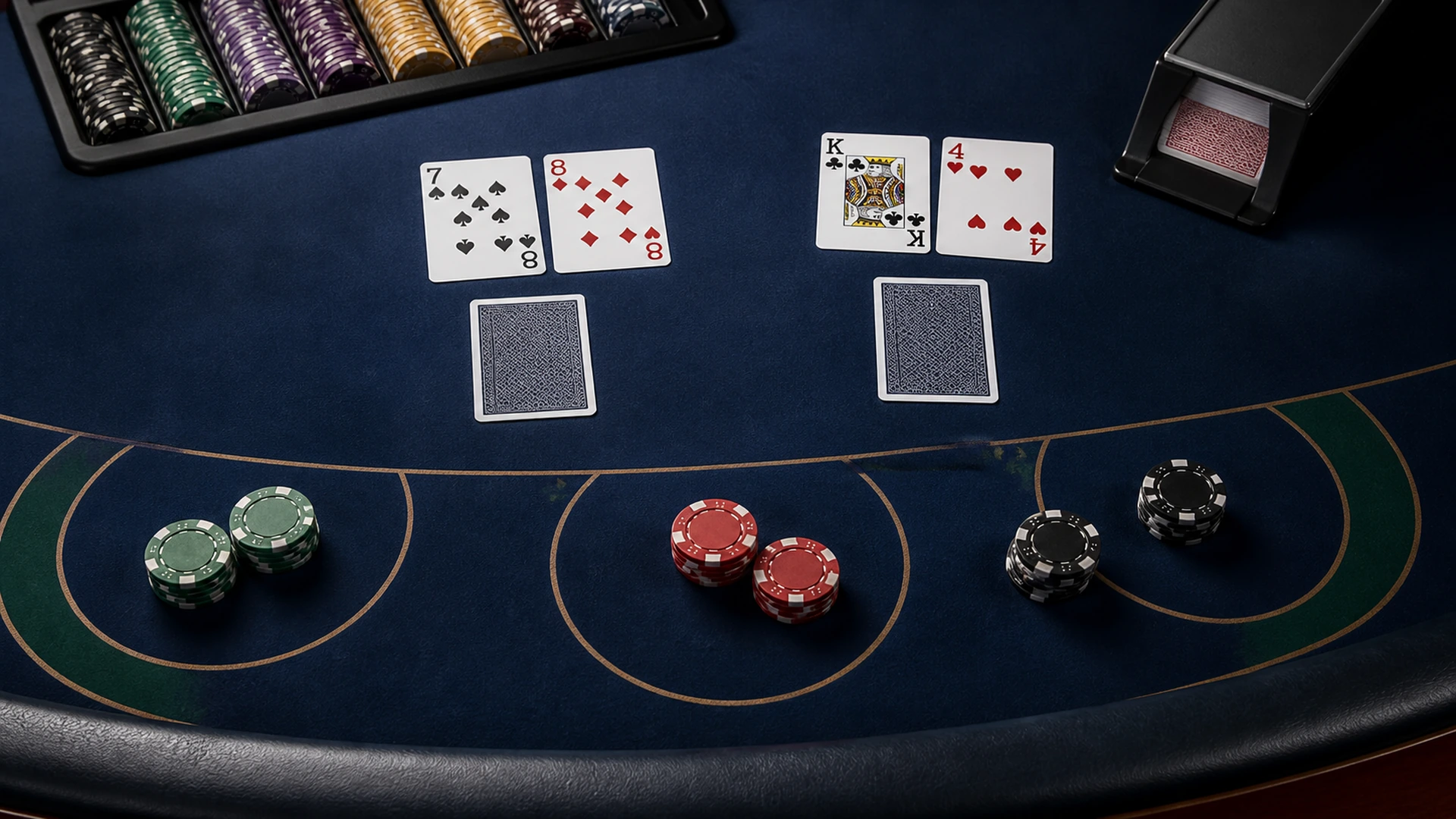
Baccarat third-card decisions are automatic. Players do not choose whether either hand takes another card: the dealer follows a fixed sequence after the first two cards are dealt. Learning that sequence helps explain the result, but it does not predict the next round or change the house edge.
This guide follows the published Wizard of Odds baccarat rules and probability reference. A live table's approved rules and information panel always take priority.
How baccarat totals work
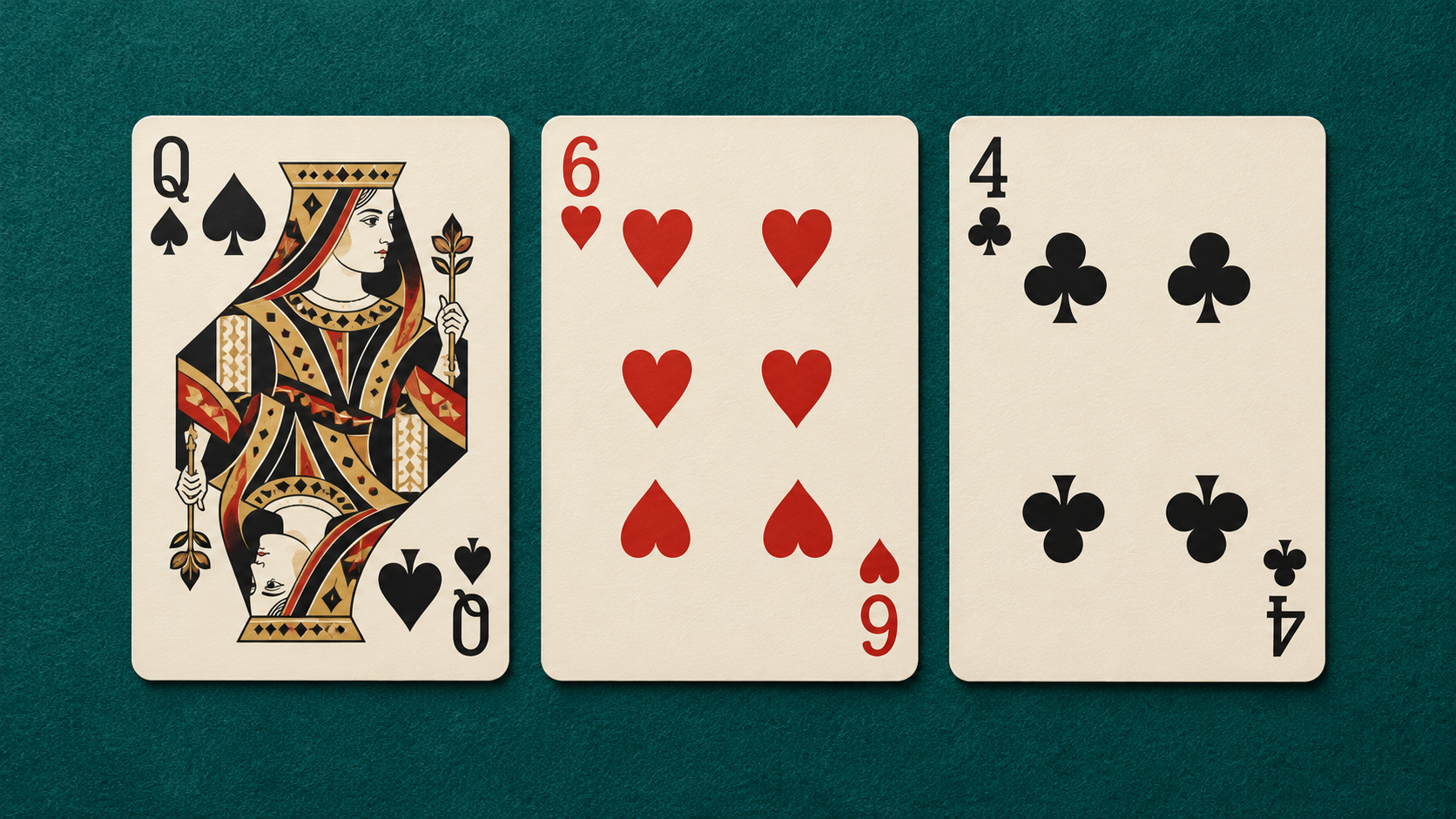
Cards two through nine count at face value. Tens, jacks, queens and kings count as zero; aces count as one. Only the last digit of a total matters, so 7 + 8 equals 15 and becomes a baccarat total of 5.
| Cards | Raw total | Baccarat total |
|---|---|---|
| 7 + 8 | 15 | 5 |
| K + 6 | 6 | 6 |
| A + 8 | 9 | 9 |
Naturals stop the drawing sequence
If either opening hand totals 8 or 9, the round has a natural. Both hands stand and no third card is drawn. The higher total wins; equal totals produce a tie.
Player drawing rule
| Player two-card total | Action |
|---|---|
| 0–5 | Draw |
| 6–7 | Stand |
| 8–9 | Natural; both hands stand |
The Player rule is resolved first. If Player stands on 6 or 7, Banker uses a simple rule: Banker draws on 0–5 and stands on 6–7.
Banker rule after Player draws
| Banker total | Banker draws when Player's third card is |
|---|---|
| 0–2 | Any value |
| 3 | Anything except 8 |
| 4 | 2–7 |
| 5 | 4–7 |
| 6 | 6–7 |
| 7 | Never |
This table is easier to read as a narrowing window: as Banker's total rises, fewer Player third-card values permit another card.
Worked examples
Player draws, Banker stands
Player starts with 2 + 3 = 5 and draws an 8. Banker starts with 4. A Banker total of 4 draws only when Player's third card is 2–7, so Banker stands.
Player draws, Banker also draws
Player starts with 4 and draws a 6. Banker starts with 6. A Banker 6 draws when Player's third card is 6 or 7, so Banker takes a third card.
Player stands
Player starts with 7 and stands. Banker starts with 5 and draws because the simpler stand-case rule applies.
What the rules do not tell you
- They do not show which betting option will win next.
- They do not make a previous sequence relevant to an independent future shoe outcome.
- They do not turn Tie or side bets into low-risk wagers.
- They do not justify increasing stakes after a loss.
The table resolves cards, not betting strategy. Commission, payout configuration, decks and side-bet rules determine the mathematics of a specific table.
Practical checklist
- Confirm the table's payout and commission information.
- Let the dealer or software apply every draw automatically.
- Use the third-card table only to understand the displayed result.
- Set a fixed session budget and time limit before play.
- Never chase a result because a hand appears “due.”
Current tables can be compared through the verified CasinOK live-casino section. CasinOK Casino presents baccarat rules as an explanation of play, not a promise of profit.
Bottom line
Player draws on 0–5 and stands on 6–7. Banker follows either the simple stand-case rule or the third-card matrix. Naturals end the sequence immediately. Memorising the rules can make baccarat easier to follow, but disciplined limits matter more than anticipating automatic card decisions.