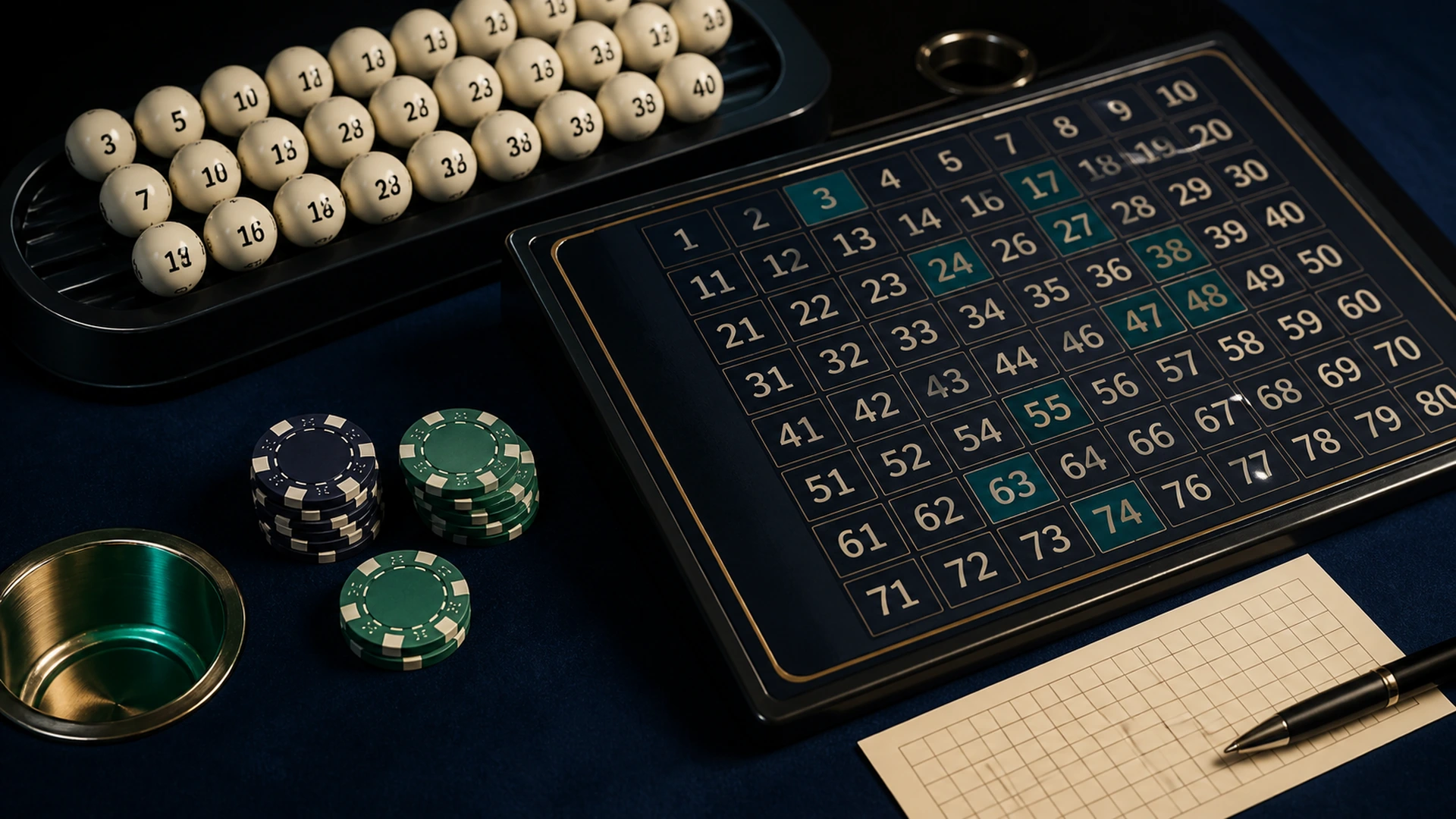
Keno asks players to select numbers from a fixed field and then compares them with a random draw. The apparent simplicity hides wide variation in ticket sizes, number of selections, payout tables, draw frequency and return. This is a review of the generic game format, not a claim that every proprietary keno title uses identical mathematics.
Typical format
| Number field | Often 1–80 |
|---|---|
| Numbers drawn | Often 20 |
| Player selections | Varies by game and paytable |
| Win basis | How many selected numbers are caught |
| Return | Version-specific; verify the live information panel |
A “spot” ticket refers to the count selected. A 5-spot ticket uses five numbers; the result can pay for catching some or all of them, depending on the published table.
How a round resolves
- Select the permitted number of spots.
- Set a stake within the game's stated limits.
- The game draws its configured set of numbers.
- The ticket counts matches, commonly called catches.
- The paytable applies the listed return for that combination.
Editorial assessment: the format is easy to learn, but a player must inspect the paytable before every version. The same number of catches can pay differently across games.
Hit rate and payout are separate
Selecting more numbers creates more possible catch combinations, not automatically better value. A frequent small return can coexist with a high house edge, while a rare top catch can dominate promotional presentation without representing a typical session.
| Question | What to inspect |
|---|---|
| How often can any return occur? | Catch probabilities for the chosen ticket |
| How much does it return? | Exact paytable and whether stake is included |
| How uneven are outcomes? | Prize concentration and volatility |
| What is the long-run cost? | Published RTP for that configuration |
Why variance can be severe
Many keno tables concentrate meaningful prizes in unlikely high-catch results. Short sessions can therefore produce long sequences without a substantial return. Increasing the number of tickets or draw speed increases total exposure; it does not improve the underlying probabilities.
Strengths and limitations
| Strengths | Limitations |
|---|---|
| Simple selection-and-draw structure | Paytables vary widely |
| Ticket outcome is easy to verify | High prizes may have very low hit rates |
| Different spot counts offer pacing choices | Fast autoplay can increase expenditure quickly |
| No strategy decision after the draw begins | Choosing “lucky” numbers does not change probability |
What must be verified
- Total number field and balls drawn.
- Allowed spot counts and maximum tickets.
- RTP for the exact selected configuration.
- Whether displayed prizes include the original stake.
- Autoplay, draw speed and stop controls.
- Maximum win and any progressive-jackpot contribution.
Editorial judgment: transparent paytables and visible probability information matter more than visual polish. A version that omits a clear RTP or makes stake exposure difficult to calculate should be avoided.
Responsible session approach
Choose one ticket structure, calculate the total cost per draw and set a draw limit in advance. Do not add tickets after losses or treat repeated numbers as signals. Each permitted combination has the probability defined by the random draw and the game's rules.
Generic number-draw titles may be listed within the verified CasinOK mini-games section. CasinOK evaluates the published rules and paytable rather than implying that a number-selection pattern can beat random outcomes.
Verdict
Keno is accessible but often highly volatile. Its quality depends on transparent mathematics, sensible speed controls and a readable paytable. Players who prefer frequent decision-making may find it passive; those who like simple draws should still compare RTP and total session cost before choosing a version.